


600 €
750 €
Baisse de prix de 20%
623,90 €
Transaction sécurisée
Payez en 2, 3 ou 4 fois dès 164,76 €/mois avec

Informations clés
Description
Complet
Livraison possible
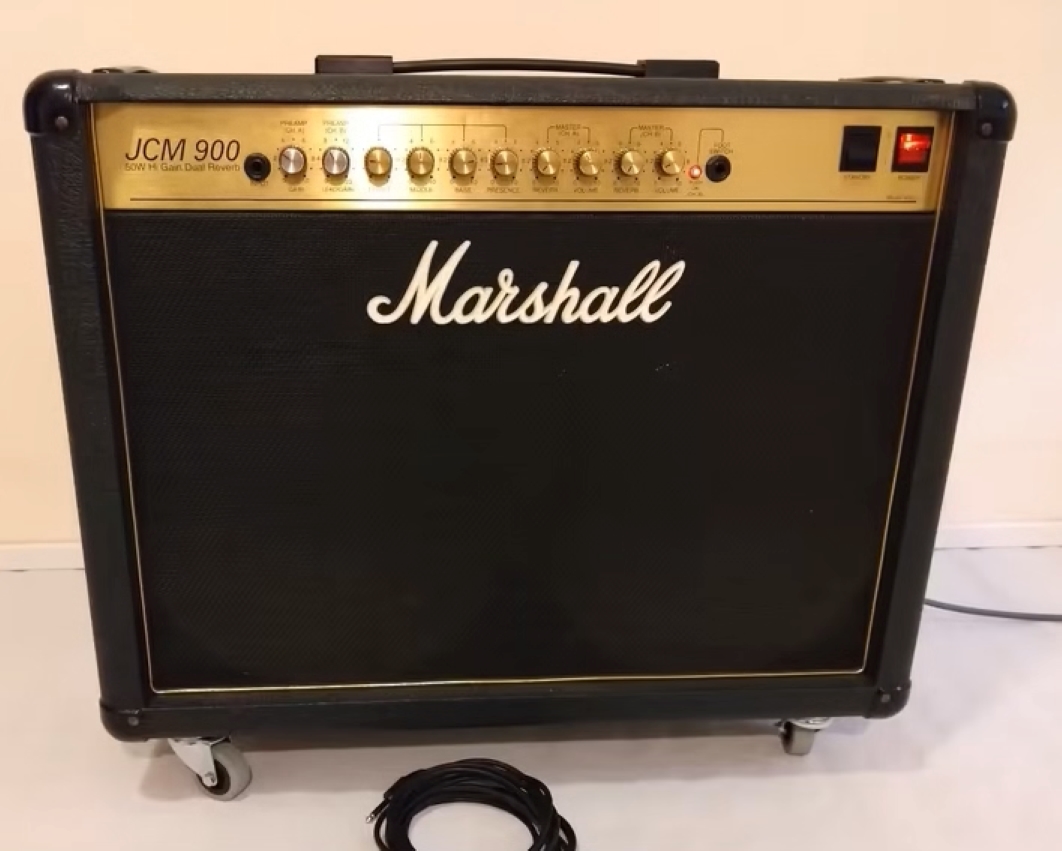
Marshall JCM 900 100W 4502 2x12" combo (années 1990)Clean channel: sonne comme un JCM 800
Dirty channel: de clean à léger overdrive vers 7-10 (blues) au son plus entre overdrive 1-3 et fuzz 7-10 avec du grave à souhait (SRV lead)
Condition: 9.5/10 super état, studio seulement, tolex sans marque
The JCM-900 Series replaced the JCM-800 Series in 1990. This new series featured two basic models: the Hi-Gain Master Volume MK III and the Hi Gain Dual Reverb. The Hi-Gain Master Volume MKIII was the latest incarnation of the popular Models 2203 and 2004, while the Hi-Gain Dual Reverb was an updated version of the JCM 800 Models 2205 and 2210. Marshall responded to consumer demand at the time, and added more gain and distortion to this series as well as improved effects loops. The gain section featured two stages with two different knobs - the first one ranged from the standard 0 to 10, while the second knob added on to this by ranging from 10 to 20. Guitarist Nigel Tufnel of Spinal Tap is largely credited with coming up with the extra stage of gain. In the movie This Is Spinal Tap, Tufnel's Marshall has a gain knob that goes one beyond the normal highest point of ten to eleven. Marshall actually had Sir Christopher Guest (the actor who played Nigel Tufnel) at the Winter NAMM show in 1990 to introduce the new JCM 900 Series.
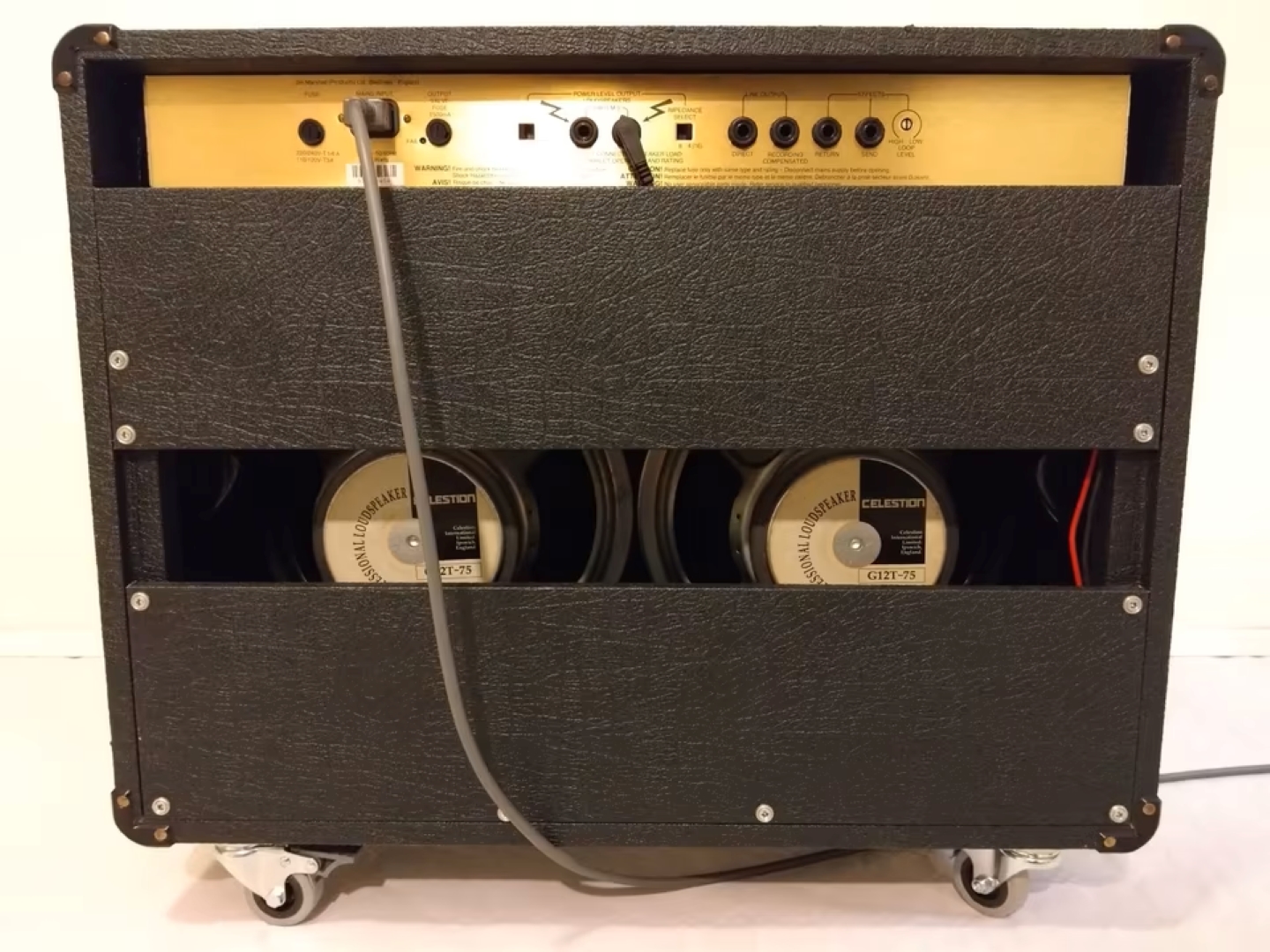
Other features of the JCM 900 Series include a series effects loop with adjustable levels, a high/low power switch that acts as a half-power switch by changing the tube's operation from pentode to triode, two line outputs including a direct out and a new recording compensated recording out, and new tube output protection fuses that would blow a fuse if a tube failed protecting the amp from damage.
Marshall also introduced a new numbering system for the JCM 900 Series that actually supplied information about the model's specifications instead of being a random number assignment. Like their previous numbering system, the new system featured four numbers, but that is where the similarities ended. The first number indicated which one of two chassis the amp featured with a 2 for the Hi-Gain Master Volume chassis and a 4 for the Hi-Gain Dual Reverb. The second and the third numbers indicated which one of two wattage outputs the amp had with 50 for 50 watts and 10 for 100 watts. The final number indicated the configuration of an amp: a 0 for a head-unit, a 1 for a 1-12 in. combo, or a 2 for a 2-12 in. combo.
The JCM 900 Series remained largely unchanged for their production run, aside from the two Hi-Gain Master Volume heads.
In 1993, the Model 2100 and 2500 were updated by adding an extra preamp tube for more gain. These amps were called the SL-X, which stood for Super Lead Extended. These new SL-X amps were also referred to as MKIVs in Marshall's literature and price lists, but neither these nor the MKIII models (Models 2100 and 2500) had these markings anywhere on the amplifiers. The JCM 900 was discontinued after 1998 when it was replaced by the JCM 2000 Series that featured the new DSL (Dual Super Lead) and TSL (Triple Super Lead) heads.
Achetez en toute sécurité avec Looper (par Audiofanzine)
- Conçu et géré par Audiofanzine (noté "Excellent" sur Truspilot)
- Paiement sécurisé de bout en bout (quelque soit le mode de remise)
- 48h pour tester le produit
- Service client et suivi complet de transaction
- Multiples modes de paiement


En savoir plus
Localisation
Chantilly, Picardie
Les annonces de THX 2138


 THX 2138
4 annonces en ligne
THX 2138
4 annonces en ligne
Avis utilisateurs
Aucun avis
Délai de réponse
> 1 semaine
Membre depuis
22 ans
Contacter THX 2138
Pour votre sécurité, utilisez la transaction sécurisée Audiofanzine et n’envoyez jamais d’argent en dehors de la plateforme.
Produit(s) concerné(s) par cette annonce

Charte
Conseils


